Safe Cooking Temperatures Chart (FoodSafety.gov)
The federal safe minimum internal temperature chart in one place, with rest times and how to use a thermometer to hit each number.
We may earn a commission when you buy through links on this page, at no extra cost to you. This does not change which products we cover. How we make money.
Quick groups to memorize
| Group | Number to remember |
|---|---|
| Whole cuts of beef/pork/lamb/veal (steaks, roasts, chops) + raw ham | 145°F + 3 min rest |
| Ground beef/pork/lamb + sausage + rabbit/venison + egg dishes | 160°F |
| All poultry (including ground) + stuffing + casseroles + leftovers + reheating most precooked ham | 165°F |
| Fish (finfish) | 145°F or flakes / loses translucence |
Color of meat is not a reliable doneness test. FoodSafety.gov’s chart exists because pink poultry or brown burgers can still be under the safe minimum — or the reverse.
Thermometer workflow
- Calibrate or ice-check (calibration card).
- Cook until you are close.
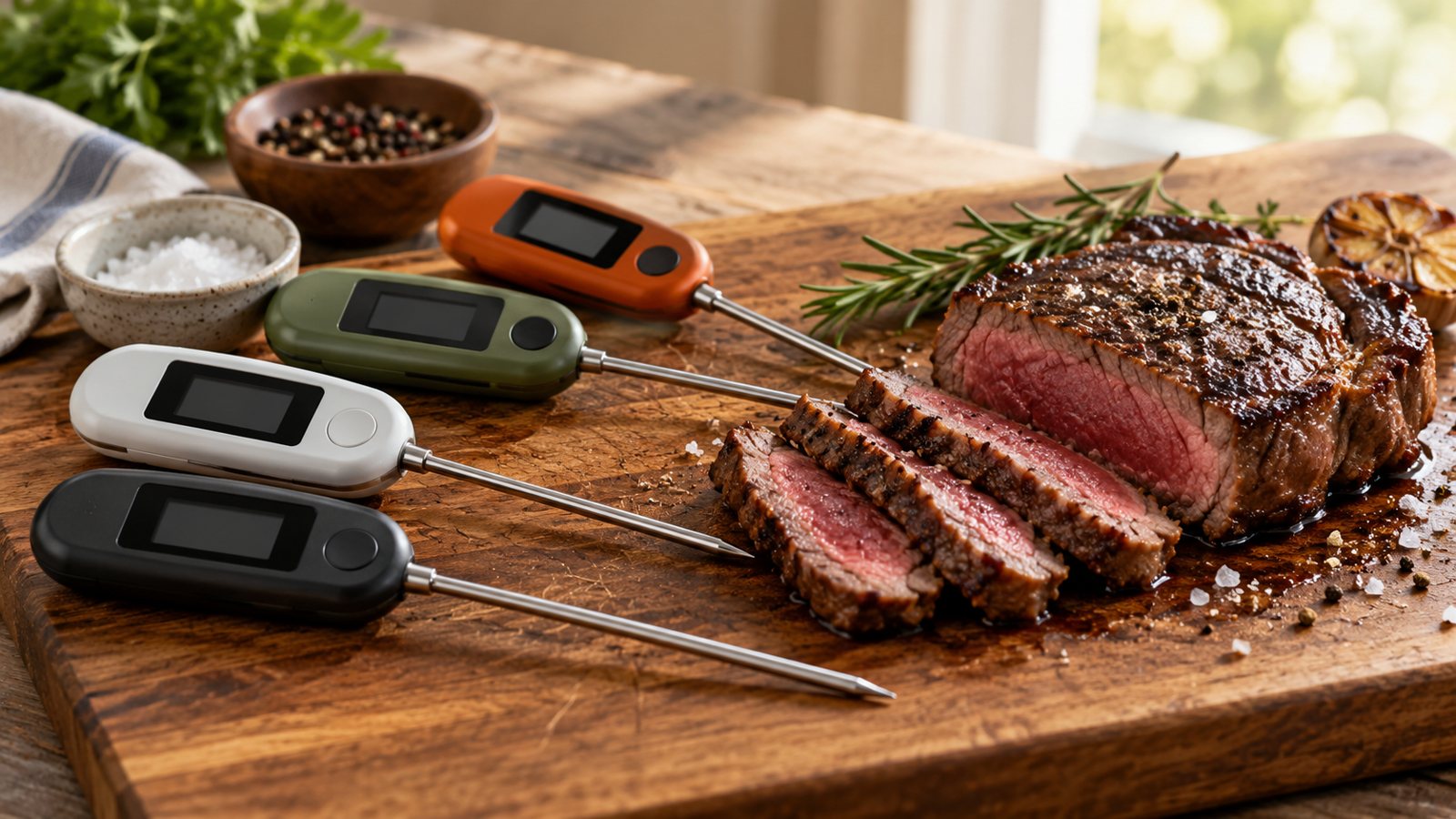
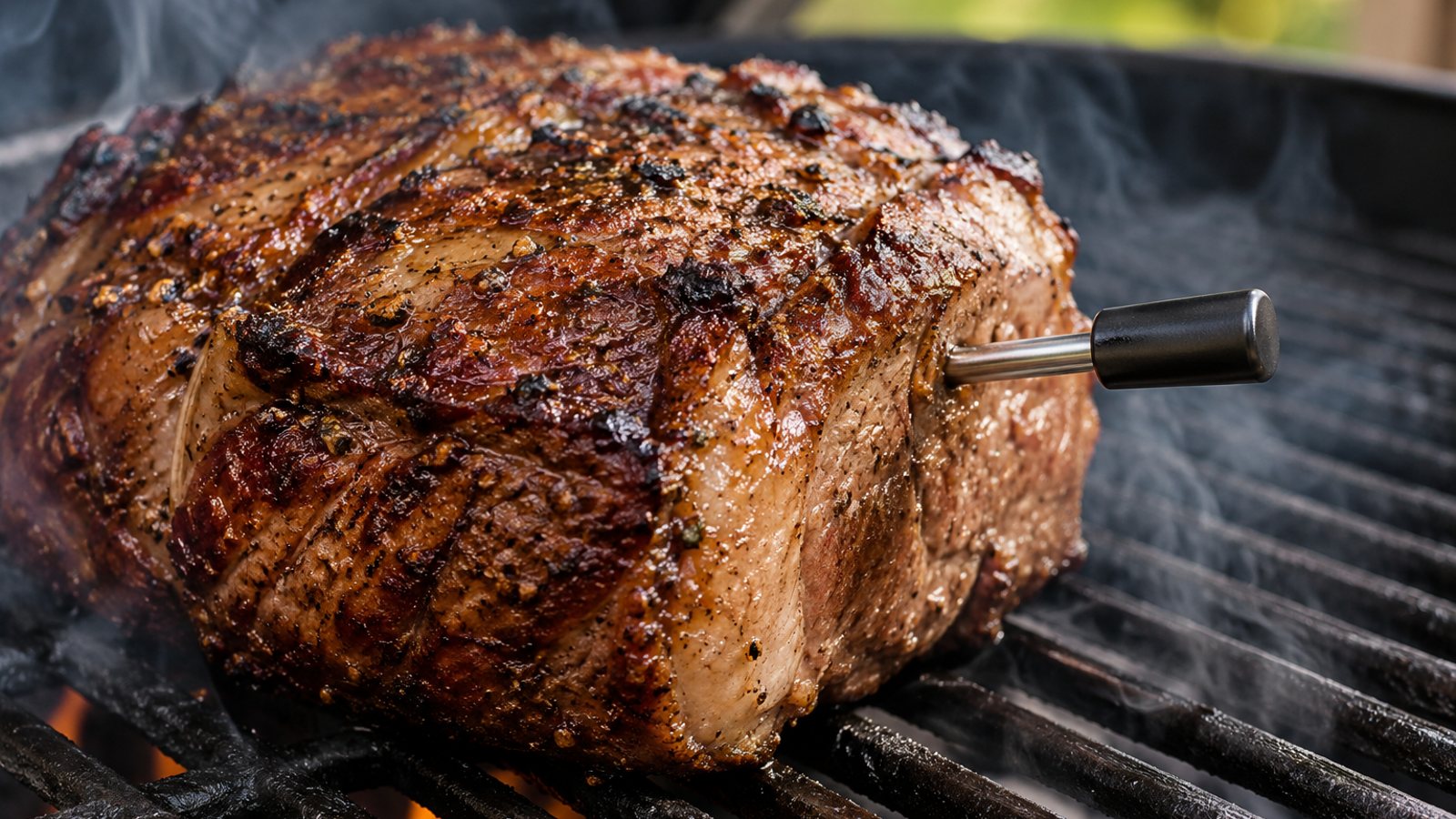
- Probe the thickest center; wait for a stable reading on an instant-read, or watch a leave-in probe (wireless roundup).
- Rest 145°F cuts for 3 minutes before carving.
- Wash the probe in hot soapy water after raw contact.
The chart
| Food | Safe minimum internal temperature | Rest time |
|---|---|---|
| Beef, bison, veal, goat, lamb: steaks, roasts, chops | 145°F (63°C) | 3 minutes |
| Beef, pork, lamb: ground meat and sausage | 160°F (71°C) | None listed |
| Pork: steaks, roasts, chops | 145°F (63°C) | 3 minutes |
| Raw ham | 145°F (63°C) | 3 minutes |
| Precooked ham, reheated | 165°F (74°C); 140°F (60°C) for hams packaged in USDA-inspected plants | None listed |
| Chicken, turkey and other poultry, including ground and stuffing | 165°F (74°C) | None listed |
| Rabbit and venison | 160°F (71°C) | None listed |
| Egg dishes such as frittata and quiche | 160°F (71°C) | None listed |
| Casseroles, with or without meat | 165°F (74°C) | None listed |
| Leftovers | 165°F (74°C) | None listed |
| Fish, such as salmon, tuna, cod or trout | 145°F (63°C), or until flesh is no longer translucent and flakes with a fork | None listed |
Foods without a single number
- Raw eggs: cook until the yolk and white are firm.
- Shrimp, lobster, crab and scallops: cook until the flesh is pearly or white and opaque.
- Clams, oysters and mussels: cook until the shells open. Discard any that stay closed.
Getting an accurate reading
- Use an instant-read thermometer compared on maker specs.
- Measure the thickest center; avoid bone, fat and hard cartilage (Lavatools manuals say the same for probe placement).
- For whole poultry, check thigh, wing and breast.
- Count the rest for 145°F cuts.
- Spot-check your thermometer in ice water (~32°F) — see how to calibrate.
Holding and leftovers
Once food is safely cooked, keep hot food at or above 140°F and cold food at or below 40°F, and respect the Danger Zone clock. Reheat leftovers to 165°F.
Frequently asked questions
What temperature is chicken safe at?
FoodSafety.gov lists 165°F (74°C) for all poultry: whole birds, breasts, legs, thighs, wings, ground poultry, giblets, sausage and stuffing inside poultry.
Is pork safe at 145°F?
Yes for pork steaks, roasts and chops: FoodSafety.gov lists 145°F (63°C) with a 3 minute rest. Ground pork and sausage need 160°F (71°C).
Why do some meats need rest time?
FoodSafety.gov says rest time lets the innermost parts and juices of the meat become fully and safely cooked.
What temperature should leftovers be reheated to?
FoodSafety.gov lists 165°F (74°C) for leftovers of any type.