How to Calibrate a Food Thermometer: Ice Water and Boiling Water
A two-minute accuracy check from USDA FSIS that works for most thermometers.
We may earn a commission when you buy through links on this page, at no extra cost to you. This does not change which products we cover. How we make money.
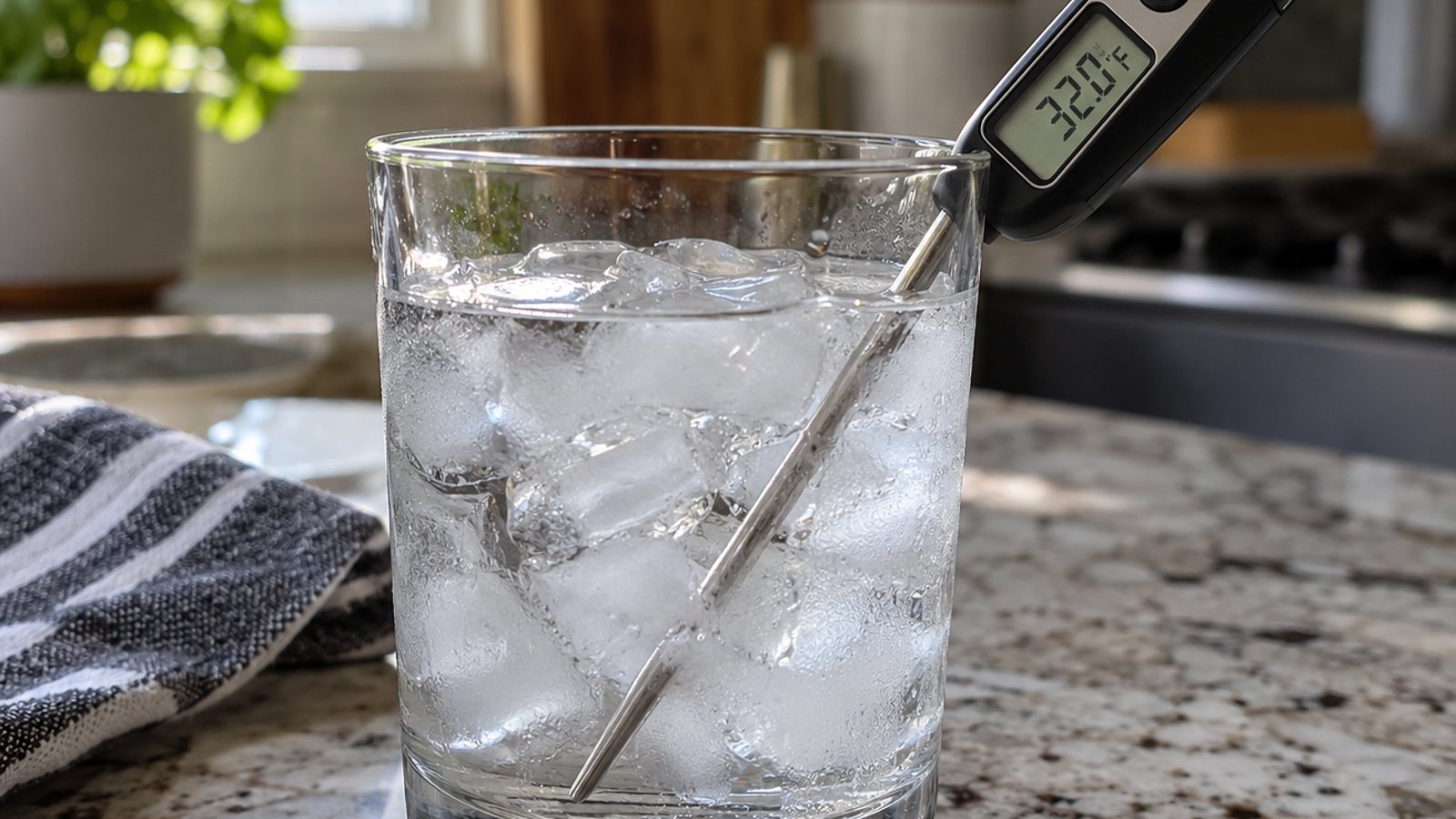
Ice water (best for most thermometers)
- Fill a large glass with ice cubes, add drinking water and stir.
- Put the stem at least 2 inches in, touching neither the sides nor the bottom.
- Wait at least 30 seconds and read it without removing the stem.
- It should read 32°F. If not, adjust per the maker instructions.
Boiling water (for higher temperatures)
- Bring clean water to a boil.
- Insert the stem at least 2 inches deep, away from the sides and bottom, and wait at least 30 seconds.
- It should read 212°F at sea level. At high altitude, USDA FSIS says water boils lower by at least 2°F and perhaps by as much as 5°F; ask your local Cooperative Extension office.
Next, learn which thermometer type suits each job, then cook to the safe temperatures chart.
Why calibrate at all
FSIS says most food thermometers read accurately within 2 to 4°F, but only if they are placed correctly and are still in calibration. A thermometer that has drifted, been dropped or been run through hot water can give a reading that looks precise but is wrong. Calibration is simply the check against a known point: 32°F for ice water and 212°F for boiling water at sea level.
Which method to use
| Ice water | Boiling water | |
|---|---|---|
| Reference point | 32°F | 212°F at sea level |
| Depth | Stem at least 2 in | Stem at least 2 in |
| Wait | At least 30 seconds | At least 30 seconds, then until stable |
| Best for | Most thermometers (FSIS) | Checking at higher temperatures |
| Watch out for | Ice touching the stem only, too little water | Altitude, and the stem touching the pot |
FSIS calls the ice-water method best for most thermometers. Its reference point does not change with altitude. For true accuracy with boiling water, FSIS says distilled water must be used.
Tips for an accurate check
- Pack the glass. Fill it with ice first, then add water and stir.
- Keep the stem clear of glass and pot. The sides and bottom can be warmer or colder than the water.
- Do not lift it out to read. FSIS says check the reading with the stem still in the water.
- Adjust as the maker says. Many dial thermometers have a calibration nut under the dial. Some digital models have a reset or offset setting.
Which types can be calibrated
From the FSIS thermometer guide:
- Thermocouple: can be calibrated.
- Wireless or smart: can be calibrated.
- Thermistor: not all models; check the instructions.
- Bimetal dial (instant-read and oven-safe): some models.
- Liquid-filled: some, by carefully moving the glass stem in its holder.
- Oven cord and thermometer fork: cannot be calibrated.
After calibrating
Use it the FSIS way. Insert the tip in the thickest part of the food, away from bone, fat and gristle. Insert it through the side for thin foods, and check whole poultry in the thigh, wing and breast. Wash it in hot, soapy water and store the probe in its sheath.
Frequently asked questions
How accurate are most food thermometers?
USDA FSIS says most give an accurate reading within 2 to 4°F, if placed correctly.
What if my thermometer cannot be adjusted?
USDA FSIS says you may need to replace it.