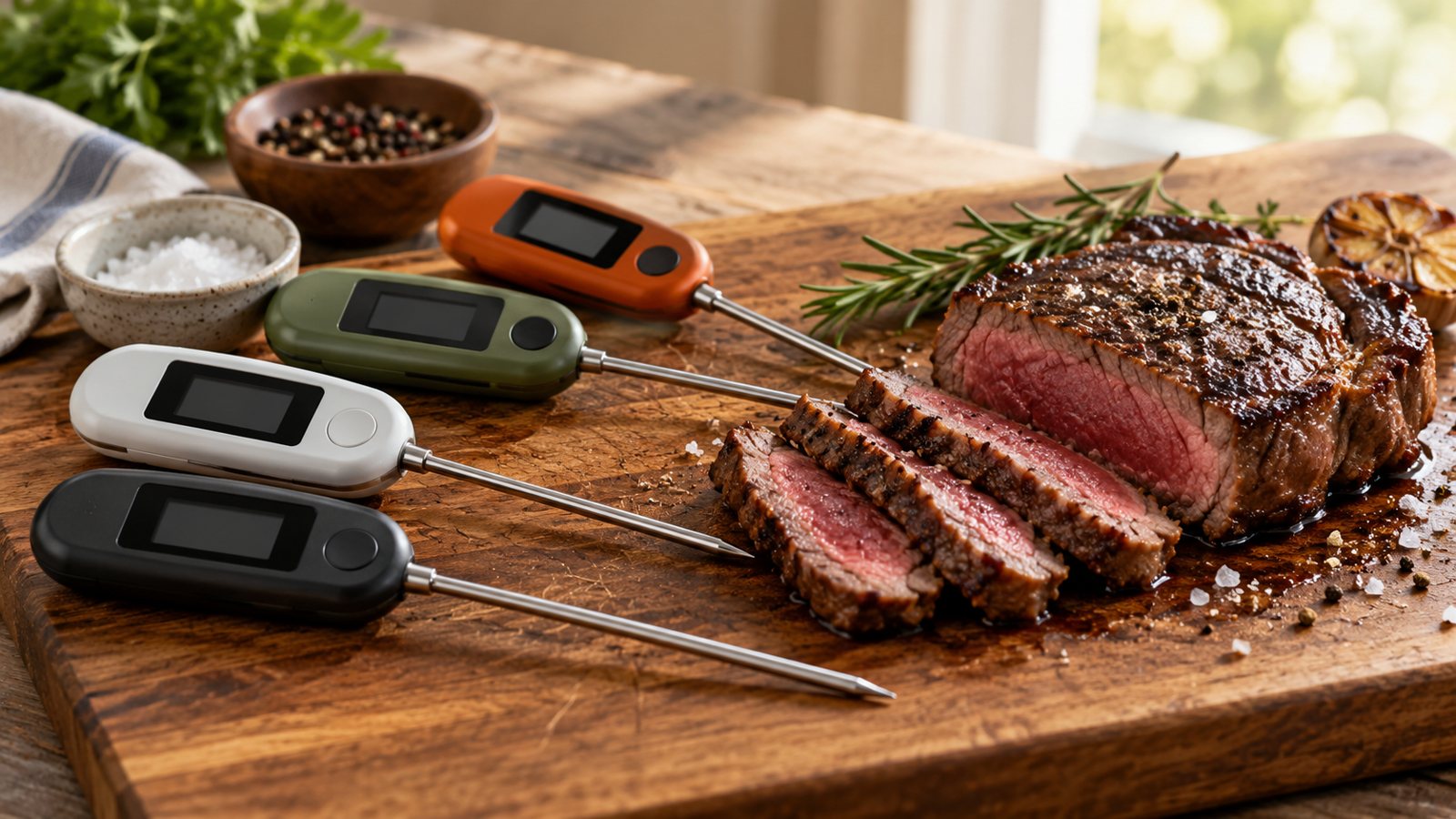
Food Thermometer Types: Thermocouple, Thermistor, Dial and Wireless
Which thermometer fits which job, using USDA FSIS speed and placement figures.
We may earn a commission when you buy through links on this page, at no extra cost to you. This does not change which products we cover. How we make money.
| Type | Speed (USDA FSIS) | Placement | Stays in food? |
|---|---|---|---|
| Thermocouple | 2 to 5 seconds | 1/4 in or deeper | No |
| Thermistor | 10 seconds | At least 1/2 in | No |
| Oven cord | 10 seconds | At least 1/2 in | Yes |
| Wireless or smart | Live readings | At least 1 in in the thickest part | Yes |
| Instant-read bimetal dial | 15 to 20 seconds | 2 to 2 1/2 in | No |
| Oven-safe bimetal dial | 1 to 2 minutes | 2 to 2 1/2 in | Yes |
Which to buy
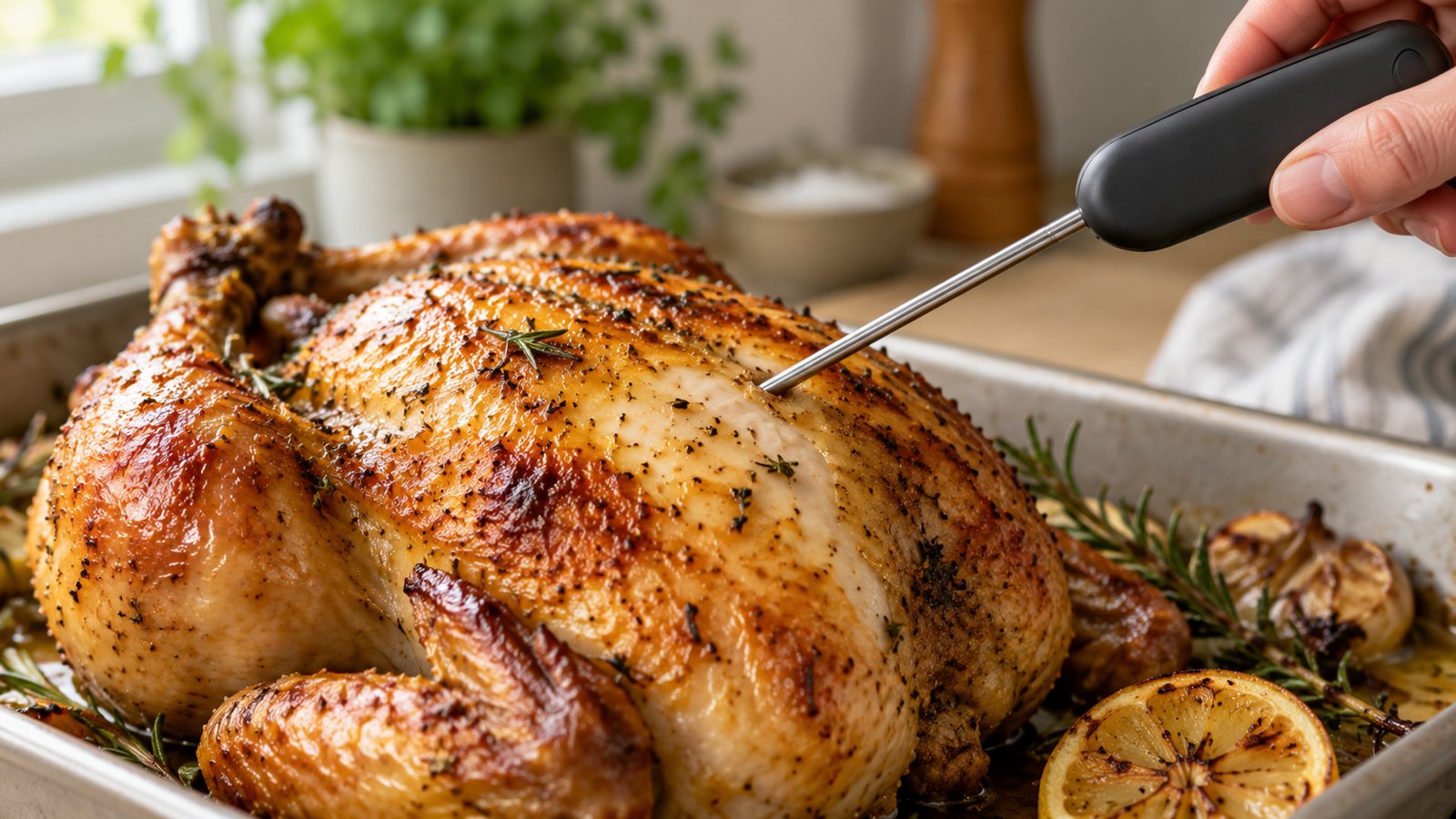
- For thin foods like burgers and chops, use a thermocouple or thermistor; insert from the side. See our best instant-read thermometers.
- For roasts and smoking, a leave-in probe watches the whole cook. See our best wireless meat thermometers.
- Dial thermometers average along 2 to 2 1/2 inches of stem, so FSIS says they are not appropriate for foods under 3 inches thick.
Each type in more detail
Thermocouple. FSIS says thermocouples reach and display the final temperature the fastest, within 2 to 5 seconds. They measure at the junction of two fine wires at the tip, and some probes are as thin as 1/16 inch. That speed makes it practical to check several spots on a roast or turkey, and the thin tip reads burgers, chops and chicken breasts accurately. They are not meant to stay in food while it cooks, and they can be calibrated.
Thermistor. A ceramic semiconductor in the tip does the sensing. The probe is about 1/8 inch thick and takes roughly 10 seconds. Because the sensor sits in the tip, it works in thin and thick foods. Place the tip in the center of the thickest part, which is usually the coolest spot. Not all thermistors can be calibrated.
Oven cord. A thermistor probe on a long metal cord runs to a base unit on the counter or stuck to the oven door by a magnet. You set a target and it beeps when the food gets there, so you do not have to open the oven. FSIS says these cannot be calibrated.
Wireless or smart. The probe stays in the food and sends live readings to a base unit or phone over Bluetooth or Wi-Fi. FSIS notes they work in the oven, on the grill and in a slow cooker, can send notifications, and can be calibrated. FSIS also lists them as more costly.
Instant-read bimetal dial. These read in about 15 to 20 seconds and average the temperature along 2 to 3 inches of stem. For a thin food you must insert the probe through the side so the whole sensing area sits in the center.
Oven-safe bimetal dial. Made to stay in a roast or turkey during cooking. If you insert one at the end instead, it can take 1 to 2 minutes to settle. Heat travels along the metal stem faster than through food, so FSIS advises checking a second and third spot, waiting at least 1 minute each time.
Other options FSIS lists
| Type | Speed | Notes |
|---|---|---|
| Thermometer fork | 2 to 10 seconds | Sensor in one tine; handy for grilling; cannot be calibrated |
| Single-use indicator | 5 to 10 seconds | Changes color at a set range; use once, only with the intended food |
| Liquid-filled (glass or metal stem) | 1 to 2 minutes | Stays in food; at least 2 in deep; not for thin foods |
| Pop-up timer | Pops at a set temperature | FSIS still recommends checking with a regular thermometer |
| Candy, jelly or deep-fry | Reads 100°F to 400°F | For sugar work and hot oil |
Care
Wash probes in hot, soapy water or as the maker says. FSIS notes most thermometers should not be immersed. Store the probe in its sheath, and keep plastic faces away from heat, where they can melt.
Frequently asked questions
Which type is fastest?
Thermocouples, which USDA FSIS says read in 2 to 5 seconds.
Can I leave a dial thermometer in the oven?
Only an oven-safe bimetal model. Instant-read types are not designed to stay in food while it cooks.