Fridge and Freezer Storage Times Chart (FoodSafety.gov)
The federal cold storage chart for the foods most people ask about.
We may earn a commission when you buy through links on this page, at no extra cost to you. This does not change which products we cover. How we make money.
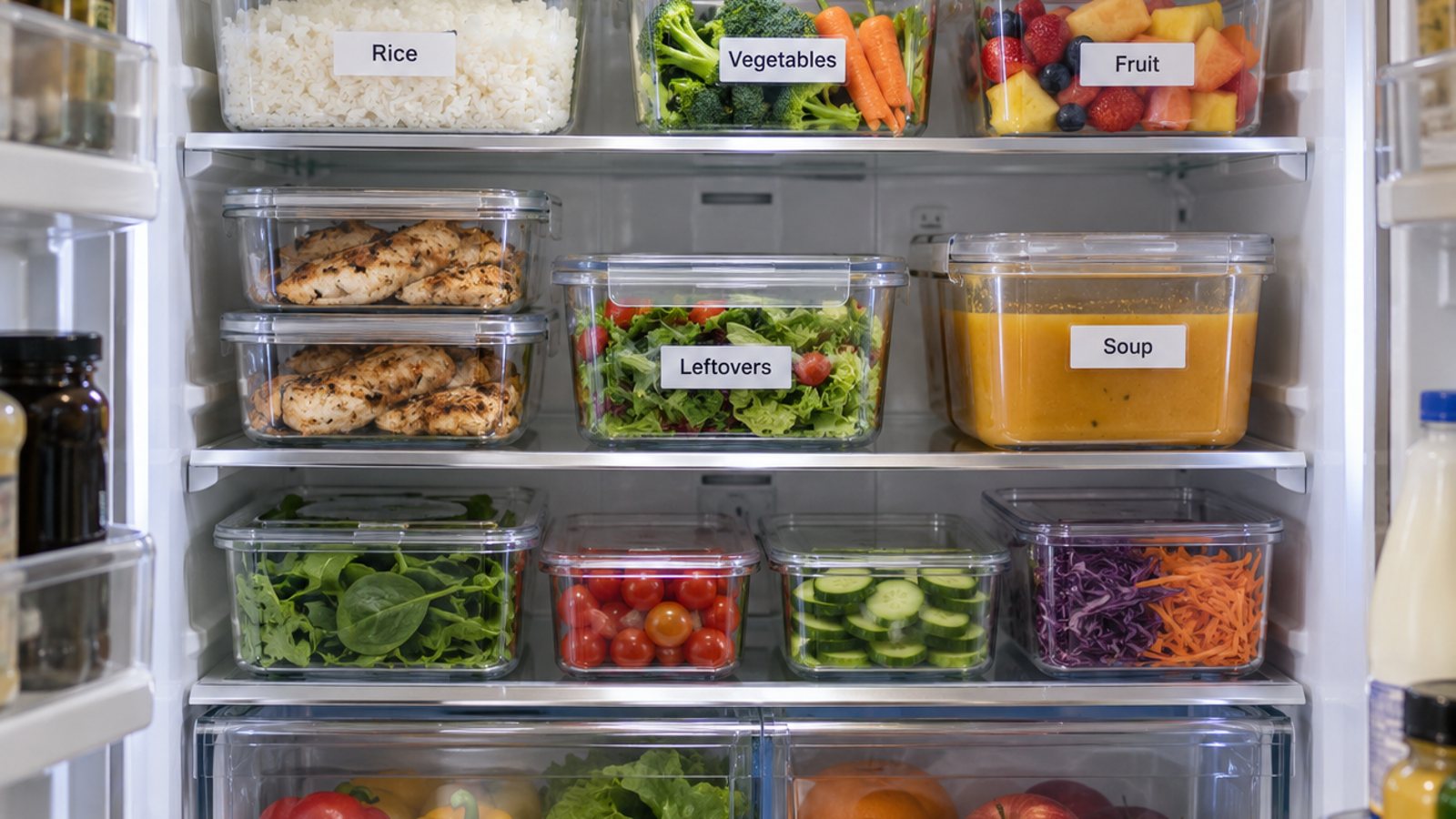
Refrigerator times assume 40°F or below; freezer times assume 0°F or below and are for quality only, per FoodSafety.gov.
| Food | Fridge | Freezer |
|---|---|---|
| Ground meat and ground poultry | 1 to 2 days | 3 to 4 months |
| Steaks, chops, roasts (beef, veal, lamb, pork) | 3 to 5 days | 4 to 12 months |
| Chicken or turkey, whole | 1 to 2 days | 1 year |
| Chicken or turkey, pieces | 1 to 2 days | 9 months |
| Fatty fish (salmon, tuna) | 1 to 3 days | 2 to 3 months |
| Shrimp | 3 to 5 days | 6 to 18 months |
| Bacon | 1 week | 1 month |
| Hot dogs, opened | 1 week | 1 to 2 months |
| Lunch meat, opened or deli sliced | 3 to 5 days | 1 to 2 months |
| Raw eggs in shell | 3 to 5 weeks | Do not freeze in shell |
| Hard-cooked eggs | 1 week | Do not freeze |
| Egg, chicken, tuna or macaroni salad | 3 to 4 days | Does not freeze well |
| Soups and stews | 3 to 4 days | 2 to 3 months |
| Cooked meat or poultry leftovers | 3 to 4 days | 2 to 6 months |
| Pizza | 3 to 4 days | 1 to 2 months |
Tips
Cool leftovers fast in shallow containers; see the Danger Zone guide. Thaw frozen items safely with our thawing guide.
More of the FoodSafety.gov chart
The table above covers the foods people ask about most. The full chart also lists these:
| Food | Fridge | Freezer |
|---|---|---|
| Hot dogs, unopened | 2 weeks | 1 to 2 months |
| Lunch meat, unopened | 2 weeks | 1 to 2 months |
| Raw sausage (chicken, turkey, pork or beef) | 1 to 2 days | 1 to 2 months |
| Fully cooked sausage | 1 week | 1 to 2 months |
| Fresh ham, uncured, uncooked | 3 to 5 days | 6 months |
| Cooked ham, store-wrapped, whole | 1 week | 1 to 2 months |
| Cooked ham, slices, half or spiral cut | 3 to 5 days | 1 to 2 months |
| Lean fish (cod, flounder, haddock, halibut, sole) | 1 to 3 days | 6 to 8 months |
| Fresh crab meat or lobster | 2 to 4 days | 2 to 4 months |
| Live clams, mussels, oysters and scallops | 5 to 10 days | Not recommended |
| Shucked clams, mussels, oysters and scallops | 3 to 10 days | 3 to 4 months |
| Squid | 1 to 3 days | 6 to 18 months |
| Raw egg whites and yolks | 2 to 4 days | 12 months |
| Casseroles with eggs, after baking | 3 to 4 days | 2 to 3 months |
| Quiche, after baking | 3 to 5 days | 2 to 3 months |
| Pumpkin or pecan pie, after baking | 3 to 4 days | 1 to 2 months |
| Chicken nuggets or patties | 3 to 4 days | 1 to 3 months |
Reading the chart correctly
- Fridge times are for safety and spoilage. FoodSafety.gov says the short limits for home-refrigerated foods help keep them from spoiling or becoming dangerous to eat. They assume the fridge holds 40°F (4°C) or below.
- Freezer times are for quality only. Food kept frozen continuously at 0°F (-18°C) or below can be kept indefinitely. Past the listed time it is still safe, but texture and flavor may suffer.
- “Do not freeze” has reasons. Eggs should not be frozen in the shell. FoodSafety.gov says to beat yolks and whites together before freezing, and notes that yolks alone do not freeze well. Egg, tuna and macaroni salads do not freeze well either.
- Accidents happen. An egg that froze in its shell by accident can be kept frozen and thawed in the fridge, then used right away. Toss it if the shell cracked.
- Canned ham. An unopened shelf-stable canned ham can sit at room temperature for 2 years. A canned ham labeled “Keep Refrigerated” lasts 6 to 9 months unopened in the fridge and should not be frozen.
Check your appliance
The chart only works if the fridge is at 40°F or below and the freezer at 0°F or below. A built-in dial does not show the actual temperature, so a separate appliance thermometer is the simple check.
Frequently asked questions
Is frozen food safe forever?
FoodSafety.gov says food kept continuously at 0°F or below can be kept indefinitely. Freezer times in the chart are for quality only.