Cutting Board Safety: Wood vs Plastic, Cleaning and Sanitizing (USDA)
Either wood or plastic is fine, says USDA. How you use and clean the board matters more.
We may earn a commission when you buy through links on this page, at no extra cost to you. This does not change which products we cover. How we make money.
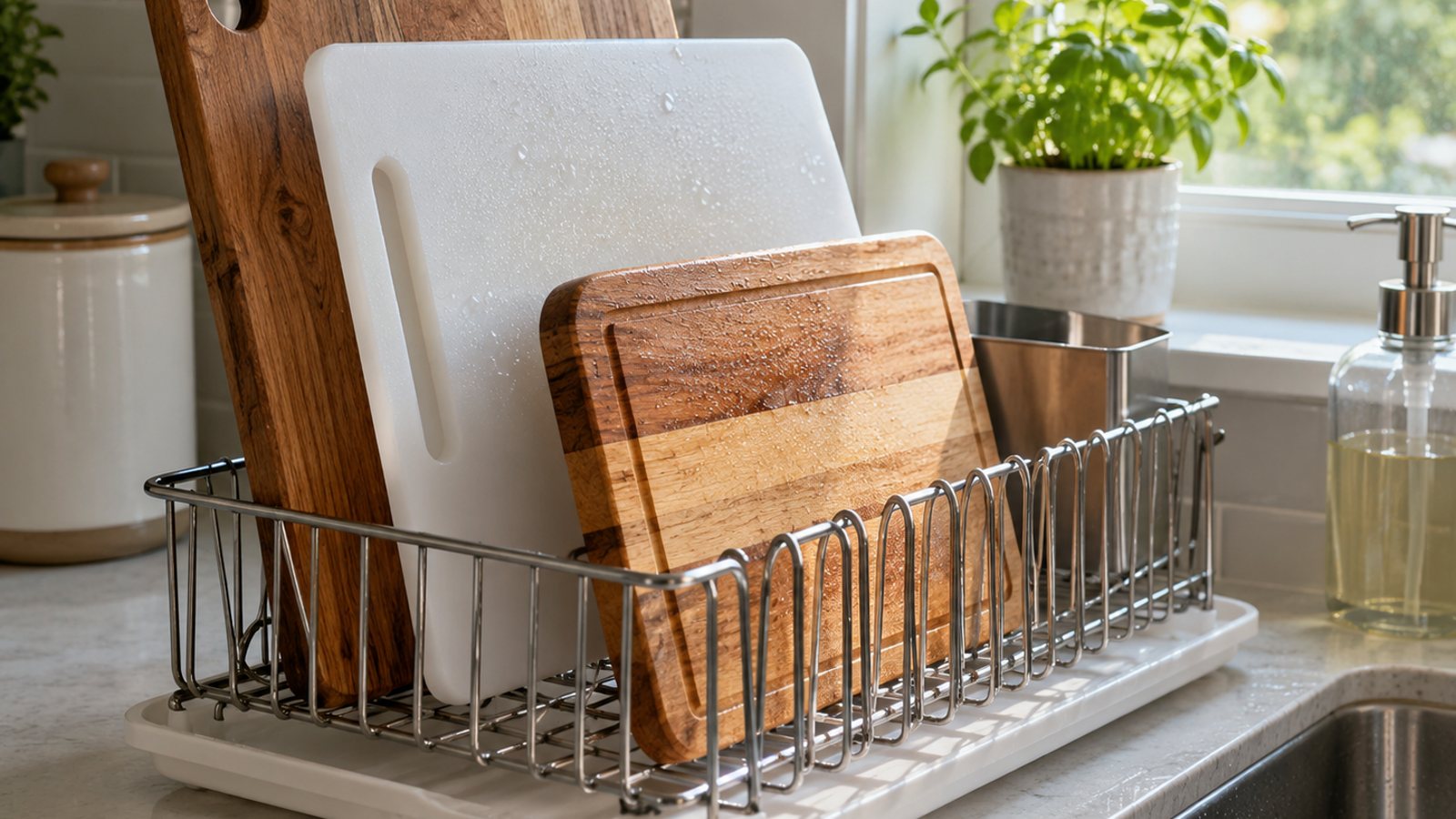
USDA’s Meat and Poultry Hotline says you may use wood or a nonporous surface such as plastic, marble, glass or pyroceramic for raw meat and poultry. Nonporous surfaces are easier to clean.
Use two boards
Keep one board for fresh produce and bread and a separate one for raw meat, poultry and seafood. That stops bacteria from raw meat reaching food that will not be cooked.
Clean after every use
Wash with hot, soapy water, rinse with clear water, then air dry or pat dry with clean paper towels. Nonporous boards and solid wood boards can go in the dishwasher; laminated boards may crack.
Sanitize
Mix 1 tablespoon of unscented liquid chlorine bleach per gallon of water. Flood the surface, let it stand for several minutes, rinse and dry.
Bamboo
USDA says bamboo is harder and less porous than hardwoods and absorbs very little moisture. Rub it with mineral oil to keep it from drying out.
More food safety: Danger Zone guide, how to thaw meat safely, safe cooking temperatures.
Frequently asked questions
Can wooden boards go in the dishwasher?
USDA FSIS says solid wood boards can, along with acrylic, plastic and glass. Laminated boards may crack and split.
How do I sanitize a cutting board?
Use 1 tablespoon of unscented liquid chlorine bleach per gallon of water, flood the surface, let it stand several minutes, rinse and air dry.